



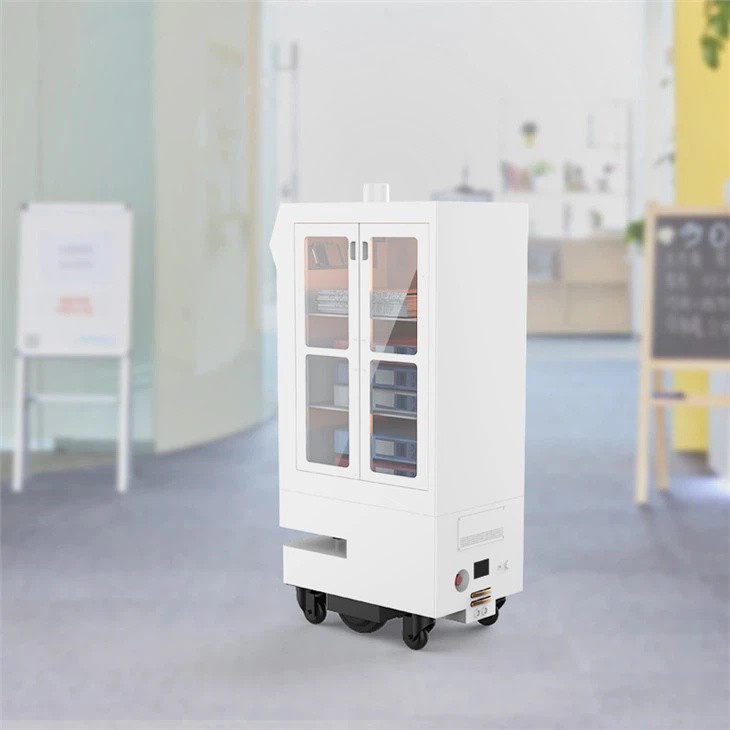
Hey there! I'm a supplier of Factory Delivery Robots, and today I wanna chat about one super important thing: the operating temperature range of these nifty machines.
So, why is the operating temperature range such a big deal? Well, just like us humans, robots work best within a certain comfort zone. If it's too hot or too cold, their performance can take a nosedive, and that's not good news for anyone running a factory.
Let's start with the lower end of the temperature spectrum. Factory Delivery Robots usually have a minimum operating temperature. For most of the models we supply, this is around -20°C to -10°C. At these low temperatures, the materials that make up the robot can become more brittle. The lubricants used in the moving parts might thicken up, which means the robot has to work harder to move around. Batteries also don't like the cold. Their capacity can drop significantly, and they might not be able to hold a charge as well. So, if your factory is in a really cold climate or has cold storage areas, you gotta make sure the robot can handle it.
On the flip side, the upper end of the operating temperature range is typically around 40°C to 50°C. When it gets this hot, the electronics inside the robot can overheat. The processors, which are like the robot's brain, can slow down to prevent damage. This can lead to slower response times and reduced efficiency. Also, the motors that power the robot can overheat too. If they get too hot, they might even stop working altogether. And let's not forget about the battery again. High temperatures can cause the battery to degrade faster, shortening its lifespan.
Now, you might be wondering how we make sure our Factory Delivery Robots can handle these temperature extremes. Well, we use high - quality materials. For the cold, we use materials that are more flexible at low temperatures. The lubricants we choose have a wide temperature range, so they stay fluid even in the cold. And for the electronics, we use components that are rated for high - temperature operation. We also design the robots with good ventilation systems to help keep the heat out.
But it's not just about the hardware. Our robots are also equipped with smart software. This software can monitor the temperature of the robot's components in real - time. If it senses that the temperature is getting too high or too low, it can adjust the robot's operation accordingly. For example, it might slow down the robot to reduce the heat generated or activate a heating or cooling system if the robot has one.
Let me give you an example of how these temperature ranges play out in real - world scenarios. Imagine a factory that produces food. This factory has a cold storage area where the temperature is around -15°C. Our Factory Delivery Robot can easily navigate this area, picking up and delivering products without any issues. The robot's battery maintains its charge, and the moving parts work smoothly.
Now, think about a factory in a hot climate. Maybe it's a metal - working factory where the temperature can reach up to 45°C. Our robot can still function efficiently. The ventilation system keeps the electronics cool, and the software ensures that the robot doesn't overwork itself.
We also have different models of Factory Delivery Robots to suit different temperature requirements. For example, our Postman Intelligent Delivery Robot is designed to be highly adaptable. It can handle a wide range of temperatures, making it suitable for various factory environments. And our Hospital Nurse Delivery Robot, although mainly used in hospitals, also has a good temperature tolerance, which is important considering the different temperature zones in a hospital.
If you're running a factory, it's crucial to take the operating temperature range of your delivery robots into account. You need to make sure that the robots you choose can handle the temperature conditions in your factory. Otherwise, you might end up with a lot of downtime and repair costs.
So, if you're in the market for Factory Delivery Robots and want to learn more about how our robots can handle different temperature ranges, don't hesitate to reach out. We can provide you with all the details you need and help you choose the right robot for your factory. Whether you have a cold storage area or a hot production floor, we've got a solution for you.
In conclusion, understanding the operating temperature range of Factory Delivery Robots is essential for anyone using these machines in a factory setting. It affects the performance, reliability, and lifespan of the robots. At our company, we've put a lot of effort into making sure our robots can handle a wide range of temperatures, so you can focus on running your factory smoothly.
If you're interested in our Factory Delivery Robots, feel free to contact us to start a procurement discussion. We're always happy to talk about how our robots can meet your specific needs.
References:

- Industry reports on industrial robot performance in different temperature conditions.
- Manufacturer's specifications for robot components used in our Factory Delivery Robots.


