



Hey there! As a supplier of cleaning robots, I often get asked about the maximum cleaning area these nifty machines can handle. It's a crucial question, especially for businesses and homeowners looking to automate their cleaning processes. So, let's dive right in and explore this topic.
Understanding the Basics
First off, it's important to know that the maximum cleaning area of a cleaning robot isn't a one - size - fits - all number. It depends on several factors, including the robot's battery life, suction power, and the type of cleaning algorithm it uses.
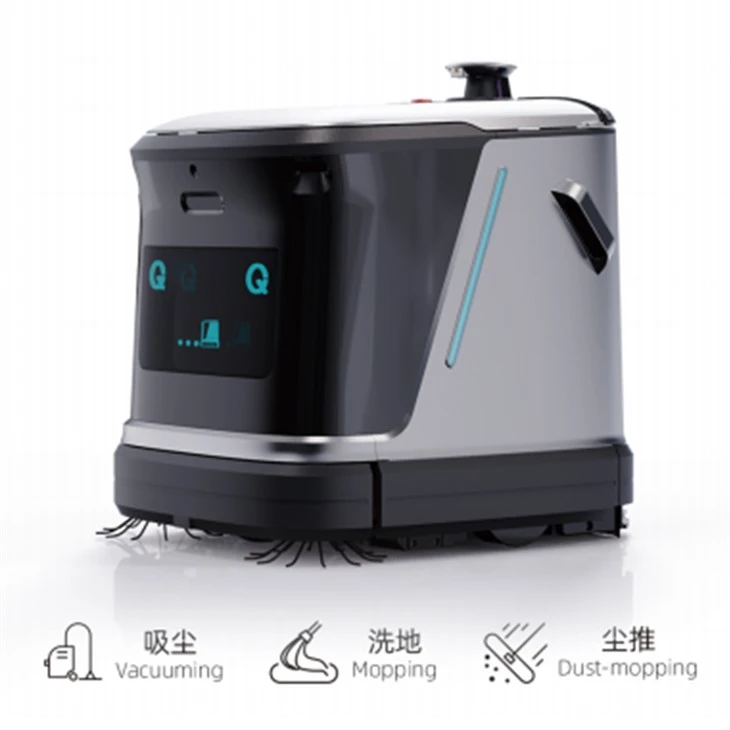
Battery life is a major player here. Just like your smartphone, a cleaning robot needs power to keep going. The longer the battery lasts, the more area it can cover. Most of our cleaning robots come with high - capacity batteries that can run for anywhere from 1.5 to 3 hours on a single charge. For instance, our Multi - scenario Scanning and Payment Robot has an advanced battery management system that allows it to operate for up to 2.5 hours, which is pretty impressive.
Suction power also matters a great deal. A robot with strong suction can clean more efficiently, meaning it can cover a larger area in less time. Our Strong Suction Robot in Garment Factory is specifically designed with high - powered suction to handle the debris and lint commonly found in garment factories. This high suction power not only cleans better but also helps the robot move through the area more quickly.
The cleaning algorithm is like the robot's brain. It determines how the robot moves around the space, ensuring that it covers every nook and cranny. Some robots use a random cleaning pattern, which might not be the most efficient for large areas. However, our robots are equipped with smart mapping algorithms. These algorithms create a map of the cleaning area on the fly, allowing the robot to plan the most efficient cleaning route. This means they can cover larger areas without missing spots.
Factors Affecting the Maximum Cleaning Area
Now, let's talk about some other factors that can affect the maximum cleaning area. The type of floor surface is a big one. Cleaning a hard - floor surface like tile or hardwood is much easier for a robot than cleaning a thick, plush carpet. On hard floors, the robot can move more freely and use less power, which means it can cover a larger area. Carpets, on the other hand, require more suction and can slow the robot down, reducing the overall cleaning area it can cover in a single charge.
The layout of the space also plays a role. A large, open - plan area is easier for a cleaning robot to navigate than a space filled with lots of furniture and obstacles. In an open area, the robot can move in straight lines and cover more ground quickly. But in a room with lots of furniture, the robot has to constantly change direction and maneuver around objects, which takes more time and energy.
The amount of debris on the floor is another factor. If the floor is heavily soiled, the robot will have to spend more time in each area to clean it properly. This reduces the overall area it can cover in a single cleaning session. Our Commercial Robot Vacuum is designed to handle different levels of debris, but it's still important to keep in mind that a dirtier floor will affect the cleaning area.
Real - World Examples
Let's look at some real - world examples to get a better idea of the maximum cleaning area. In a small office space of about 500 square feet with a hard - floor surface and minimal furniture, our standard cleaning robot can easily clean the entire area in one go. The robot can move quickly across the open space, and the battery has enough power to complete the job.
In a medium - sized retail store of around 2000 square feet, our Multi - scenario Scanning and Payment Robot is a great choice. With its long battery life and smart cleaning algorithm, it can cover the entire area in a single cleaning session, even if there are some display cases and racks to navigate around.
For large industrial warehouses that can span tens of thousands of square feet, we recommend using multiple robots or robots with extended battery packs. Our robots can be programmed to work in a coordinated way, covering different sections of the warehouse simultaneously. This way, we can ensure that the entire area gets cleaned efficiently.
Calculating the Maximum Cleaning Area
So, how can you calculate the maximum cleaning area for your specific needs? First, you need to measure the area you want to clean. Then, consider the factors we discussed earlier, such as the floor surface, layout, and debris level.
If you have a hard - floor surface with a simple layout and light debris, you can expect our standard cleaning robot to cover around 1500 - 2000 square feet per charge. For carpeted areas or spaces with more obstacles, the coverage might be around 1000 - 1500 square feet per charge.
If you're dealing with a very large area, you might want to do a test run with one of our robots. This will give you a better idea of how long it takes to clean a certain section and how much power the robot uses. Based on this test, you can then determine how many robots you need or if you need a robot with a longer battery life.

Conclusion
In conclusion, the maximum cleaning area of a cleaning robot depends on a variety of factors, including battery life, suction power, cleaning algorithm, floor surface, layout, and debris level. As a cleaning robot supplier, we offer a range of robots to suit different needs and cleaning areas. Whether you have a small office, a medium - sized store, or a large industrial warehouse, we have a solution for you.
If you're interested in learning more about our cleaning robots or want to discuss your specific cleaning requirements, don't hesitate to reach out. We're here to help you find the perfect cleaning robot for your space. Contact us today to start the conversation and take the first step towards a cleaner, more automated future!
References
- Research on cleaning robot efficiency and battery performance, Journal of Robotics and Automation
- Studies on the impact of floor surface on cleaning robot operation, International Journal of Cleaning Technology


