



In the modern era of rapid technological advancement, the integration of robots into various industries has become a significant trend. Among these, welcoming robots have emerged as a remarkable innovation, revolutionizing the way businesses interact with their customers. As a supplier of welcoming robots, I have witnessed firsthand the efficiency and potential of these intelligent machines in performing a wide range of tasks.
Understanding the Concept of Welcoming Robots
Welcoming robots are designed to serve as the first point of contact for visitors in different settings, such as hotels, shopping malls, exhibition halls, and corporate offices. These robots are equipped with advanced sensors, artificial intelligence (AI), and natural language processing (NLP) capabilities, enabling them to interact with humans in a friendly and efficient manner. They can perform tasks such as greeting visitors, providing information, guiding them to specific locations, and even assisting with basic customer service inquiries.
Efficiency in Greeting and Interaction
One of the primary tasks of a welcoming robot is to greet visitors and create a positive first impression. With their engaging personalities and human-like gestures, these robots can instantly capture the attention of guests and make them feel welcome. They can use pre-programmed scripts or real-time language processing to greet visitors in multiple languages, ensuring that everyone feels comfortable and included.
In addition to greeting, welcoming robots can also engage in meaningful conversations with visitors. They can answer frequently asked questions, provide information about the venue or event, and offer recommendations based on the visitor's interests. This not only saves time for human staff but also enhances the overall customer experience by providing accurate and personalized information.
Information Provision and Navigation
Another area where welcoming robots excel is in providing information and guiding visitors to their desired locations. These robots can be programmed with detailed maps of the venue, allowing them to provide accurate directions and navigate through complex environments. They can also use their sensors to detect obstacles and adjust their routes accordingly, ensuring a smooth and efficient navigation experience for visitors.
In exhibition halls, for example, welcoming robots can serve as virtual tour guides, leading visitors through different booths and providing information about the products and services on display. They can also interact with exhibitors and help facilitate communication between them and the visitors. This not only enhances the visitor experience but also increases the visibility and engagement of exhibitors.
Customer Service and Support
Welcoming robots can also play a crucial role in providing customer service and support. They can assist with tasks such as checking in guests, handling reservations, and resolving basic issues. By automating these processes, robots can reduce the workload on human staff and improve the efficiency of customer service operations.
In addition, welcoming robots can be equipped with advanced analytics capabilities, allowing them to collect and analyze data about visitor behavior and preferences. This data can be used to improve the overall customer experience, personalize marketing campaigns, and make informed business decisions.
Efficiency in Different Industries
The efficiency of welcoming robots varies depending on the industry and the specific tasks they are designed to perform. In the hospitality industry, for example, these robots can be used to greet guests at the hotel entrance, assist with check-in and check-out processes, and provide information about hotel facilities and services. This not only improves the guest experience but also reduces the workload on hotel staff, allowing them to focus on more complex tasks.
In the retail industry, welcoming robots can be used to greet customers at the store entrance, provide product information, and assist with finding specific items. They can also be used to collect customer feedback and analyze data about shopping behavior, helping retailers to improve their product offerings and marketing strategies.
In the healthcare industry, welcoming robots can be used to greet patients at the hospital entrance, provide information about the hospital layout and services, and assist with patient registration. They can also be used to monitor patient vital signs and provide basic medical advice, improving the efficiency of healthcare operations and reducing the workload on medical staff.
Challenges and Limitations
While welcoming robots offer many benefits, they also face several challenges and limitations. One of the main challenges is the high cost of development and deployment. These robots require advanced technology and sophisticated programming, which can be expensive to develop and maintain. In addition, the cost of purchasing and installing these robots can be significant, especially for small and medium-sized businesses.
Another challenge is the limited functionality of current welcoming robots. While these robots can perform a wide range of tasks, they are still not as versatile as human staff. They may have difficulty handling complex situations or providing personalized assistance in certain cases. In addition, the accuracy of their language processing and speech recognition capabilities may vary depending on the environment and the quality of the audio input.
Future Developments and Trends
Despite these challenges, the future of welcoming robots looks promising. As technology continues to advance, these robots are likely to become more intelligent, versatile, and affordable. They will be able to perform a wider range of tasks, interact with humans in more natural and intuitive ways, and provide even more personalized and efficient service.

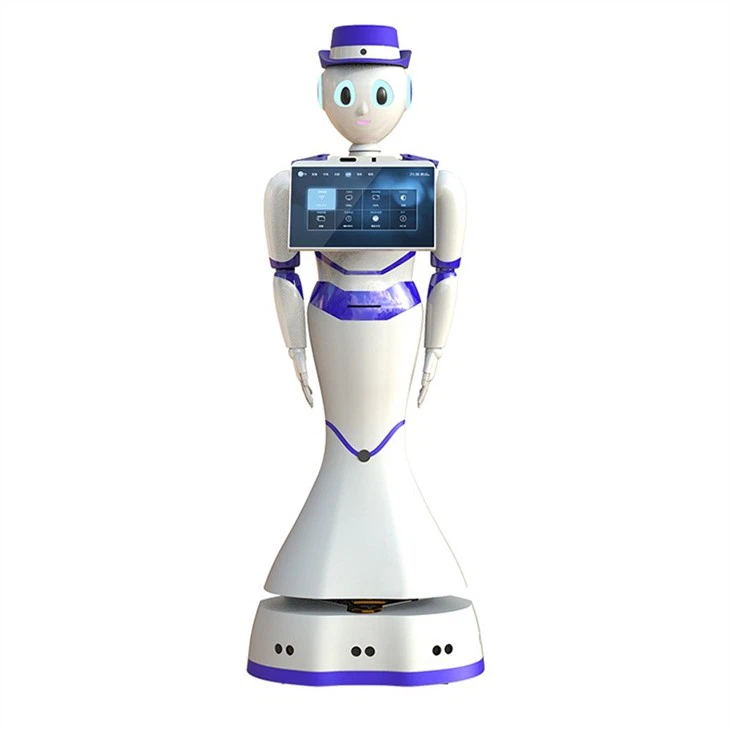
One of the key trends in the development of welcoming robots is the integration of artificial intelligence and machine learning technologies. These technologies will enable robots to learn from their interactions with humans and adapt to changing environments and situations. They will also be able to provide more accurate and personalized information, improving the overall customer experience.
Another trend is the development of more humanoid robots, which are designed to look and behave more like humans. These robots will be able to communicate with humans in a more natural and intuitive way, using facial expressions, gestures, and body language. They will also be able to provide a more emotional and empathetic response, making them more suitable for tasks such as customer service and support.
Conclusion
In conclusion, welcoming robots offer a wide range of benefits in terms of efficiency, customer experience, and cost savings. As a supplier of these robots, I have seen firsthand the positive impact they can have on businesses in various industries. While there are still some challenges and limitations to overcome, the future of welcoming robots looks bright, with continued advancements in technology and increasing adoption by businesses around the world.
If you are interested in learning more about our Commercial Service Robot, Commercial Humanoid Reception Service Robot, or Exhibition hall service humanoid robot, please feel free to contact us to discuss your specific needs and requirements. We look forward to the opportunity to work with you and help you enhance your business operations with the latest in robotic technology.
References
- Smith, J. (2020). The Future of Service Robots in the Hospitality Industry. Journal of Hospitality Technology, 15(2), 123-135.
- Johnson, A. (2019). The Impact of Artificial Intelligence on Customer Service in the Retail Industry. International Journal of Retail Management, 22(3), 234-246.
- Brown, C. (2018). Healthcare Robotics: Transforming the Future of Patient Care. Medical Robotics Journal, 10(1), 45-56.


