



In the dynamic landscape of modern healthcare, technological advancements are playing an increasingly pivotal role in enhancing efficiency, safety, and patient care. Among these innovations, hospital nurse delivery robots have emerged as a transformative solution, revolutionizing the way medical supplies, medications, and specimens are transported within healthcare facilities. As a leading supplier of Hospital Nurse Delivery Robot, we understand the critical importance of security in these robots. In this blog, we will delve into the key security features that make our hospital nurse delivery robots a reliable and secure choice for healthcare institutions.
Physical Security
One of the primary concerns in any healthcare environment is the protection of the robot itself and the items it transports. Our hospital nurse delivery robots are designed with robust physical security features to safeguard against unauthorized access, tampering, and damage.
Sturdy Construction
The robots are built with high - quality materials that can withstand the rigors of a busy hospital environment. The outer casing is made of durable plastics and metals that are resistant to impacts, scratches, and chemical spills. This ensures that the robot can operate safely and reliably, even in challenging conditions.
Lockable Compartments
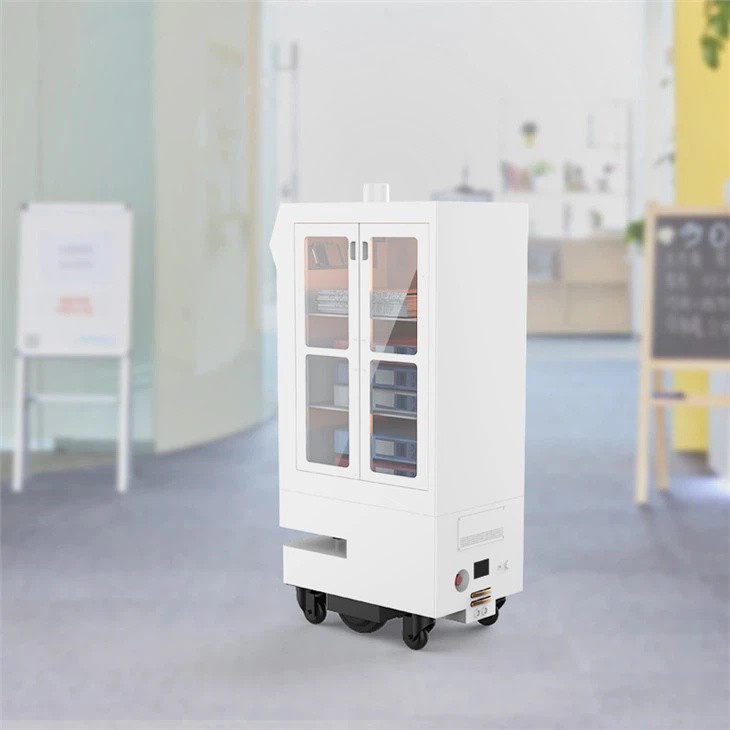
To protect the items being transported, our robots are equipped with lockable compartments. These compartments can be accessed only by authorized personnel using secure authentication methods, such as PIN codes, RFID cards, or biometric scanners. This prevents unauthorized access to medications, sensitive specimens, and other valuable items, reducing the risk of theft and misuse.
Anti - Tip Design
In a hospital setting, where there may be uneven floors, obstacles, and heavy traffic, the risk of the robot tipping over is a concern. Our robots are designed with a low center of gravity and a wide base to prevent tipping. Additionally, they are equipped with sensors that can detect when the robot is in an unstable position and automatically take corrective action, such as stopping or adjusting its movement.
Navigation and Collision Avoidance
Safe navigation is crucial for hospital nurse delivery robots to operate effectively without causing disruptions or accidents. Our robots are equipped with advanced navigation and collision avoidance systems to ensure smooth and secure movement within the hospital.
Laser Scanning and Mapping
The robots use laser scanners to create a detailed map of their surroundings. This map is continuously updated as the robot moves, allowing it to navigate accurately through complex hospital layouts. The laser scanners can detect obstacles in real - time, such as walls, furniture, and people, and adjust the robot's path accordingly.
Ultrasonic and Infrared Sensors
In addition to laser scanners, our robots are equipped with ultrasonic and infrared sensors. These sensors provide additional information about the robot's proximity to objects and can detect smaller obstacles that may not be visible to the laser scanners. The combination of these sensors ensures comprehensive obstacle detection and collision avoidance.
Emergency Stop Function
To ensure the safety of patients, staff, and the robot itself, our robots are equipped with an emergency stop function. This function can be activated manually by a nearby operator or automatically in the event of an emergency, such as a collision or a malfunction. When the emergency stop is activated, the robot immediately stops moving, preventing further damage or injury.
Data Security
In the digital age, data security is of utmost importance, especially when it comes to healthcare information. Our hospital nurse delivery robots are designed with advanced data security features to protect patient information, delivery logs, and other sensitive data.
Encryption
All data transmitted between the robot and the hospital's central system is encrypted using industry - standard encryption algorithms. This ensures that the data remains secure and confidential, even if it is intercepted during transmission.
Secure Authentication
Access to the robot's control system and data is restricted to authorized personnel only. Secure authentication methods, such as multi - factor authentication, are used to verify the identity of users. This prevents unauthorized access to the robot's settings, delivery schedules, and other sensitive information.
Data Backup and Recovery
To ensure the integrity of the data, regular backups are taken of all delivery logs, sensor data, and other important information. In the event of a system failure or data loss, the backup data can be easily restored, minimizing the impact on the robot's operation.
Software Security
The software that powers our hospital nurse delivery robots is a critical component of their security. We take a proactive approach to software security, implementing a range of measures to protect against cyber threats.
Regular Software Updates
Our development team regularly releases software updates to address security vulnerabilities and improve the performance of the robots. These updates are automatically installed on the robots to ensure that they are always running the latest and most secure version of the software.
Intrusion Detection and Prevention
Our robots are equipped with intrusion detection and prevention systems that monitor the robot's network traffic and system activity for signs of unauthorized access or malicious behavior. If an intrusion is detected, the system can take immediate action, such as blocking the suspicious IP address or shutting down the robot's network connection.
Secure Boot Process
To prevent unauthorized software from being installed on the robot, our robots use a secure boot process. This process verifies the integrity of the software before it is loaded, ensuring that only trusted and authorized software is running on the robot.

Compliance with Healthcare Standards
Our hospital nurse delivery robots are designed to comply with all relevant healthcare standards and regulations. This includes standards related to patient safety, data security, and medical device safety. By adhering to these standards, we ensure that our robots can be safely and legally used in healthcare facilities around the world.
Conclusion
As a supplier of Hospital Nurse Delivery Robot, we are committed to providing our customers with the highest level of security and reliability. Our robots are equipped with a comprehensive range of security features, including physical security, navigation and collision avoidance, data security, software security, and compliance with healthcare standards. These features ensure that our robots can operate safely and efficiently in hospital environments, protecting patients, staff, and valuable medical supplies.
If you are interested in learning more about our hospital nurse delivery robots or are considering a purchase for your healthcare facility, we encourage you to contact us for a detailed consultation. Our team of experts is ready to assist you in finding the best solution for your specific needs.
References
- International Electrotechnical Commission (IEC). (2012). Medical electrical equipment - Part 60601 - 1: General requirements for basic safety and essential performance.
- Health Insurance Portability and Accountability Act (HIPAA). (1996). Public Law 104 - 191.
- National Fire Protection Association (NFPA). (2018). NFPA 99: Health Care Facilities Code.


