



Can a Factory Delivery Robot be used in a paper - making factory?
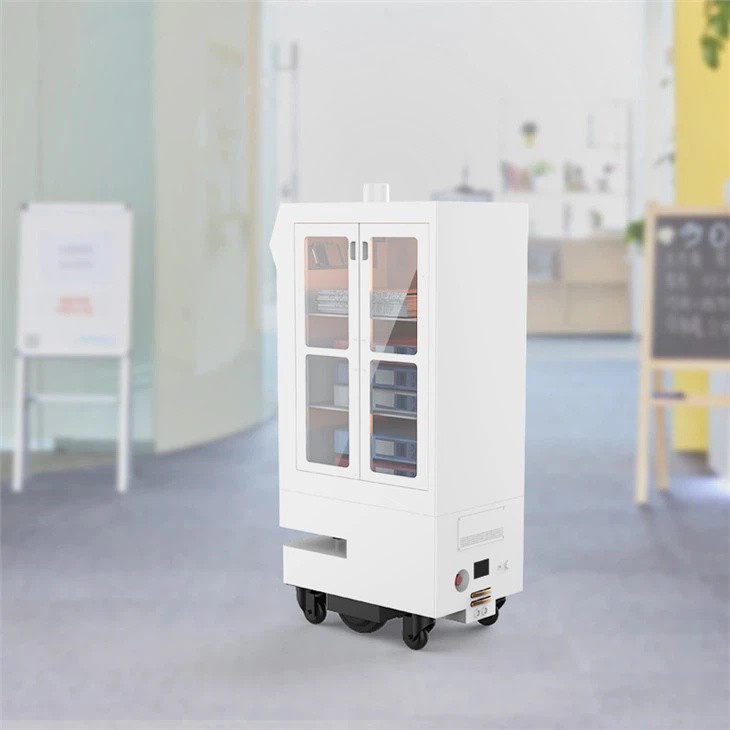
As a supplier of factory delivery robots, I've often been asked about the applicability of our robots in various industrial settings. One question that frequently arises is whether a factory delivery robot can be used in a paper - making factory. In this blog, I'll explore the feasibility, advantages, and potential challenges of using our delivery robots in a paper - making environment.
The Nature of Paper - Making Factories
Paper - making factories are complex industrial facilities with a series of well - defined processes. The production of paper typically involves raw material preparation, pulping, papermaking, and finishing. Each stage requires the movement of large quantities of materials, such as wood chips, pulp, paper rolls, and chemicals. The environment in a paper - making factory is characterized by high humidity, dust, and the presence of heavy machinery.
Feasibility of Using Factory Delivery Robots
Adaptability to the Environment
Our factory delivery robots are designed to operate in a variety of industrial environments. They are equipped with advanced sensors and navigation systems that can adapt to different floor conditions, including the often - slippery floors in paper - making factories. The robots are also built to withstand a certain level of dust and humidity, which are common in paper - making processes. For example, the robot's body is made of durable materials that resist corrosion from moisture and chemicals used in the papermaking process.
Material Handling Capabilities
In a paper - making factory, there is a need to move heavy and bulky materials. Our delivery robots are capable of handling loads of different sizes and weights. They can transport paper rolls, bales of raw materials, and containers of chemicals safely and efficiently. The robots are equipped with adjustable grippers and lifting mechanisms that can be customized to fit the specific requirements of paper - making materials.
Integration with Existing Systems
Paper - making factories usually have existing production lines and management systems. Our delivery robots can be easily integrated with these systems. They can communicate with the factory's central control system to receive tasks, report their status, and coordinate with other equipment. This integration ensures seamless operation and improves the overall efficiency of the production process.
Advantages of Using Factory Delivery Robots in Paper - Making Factories
Increased Efficiency
One of the main advantages of using delivery robots is the significant increase in efficiency. Robots can work continuously without breaks, reducing the time required for material transportation. They can also follow optimized routes, avoiding congestion and delays in the factory. For example, instead of relying on human - operated forklifts that may take longer to navigate through the factory floor, robots can quickly and accurately deliver materials to their destinations, improving the throughput of the paper - making process.
Improved Safety
The paper - making environment can be hazardous, with heavy machinery, sharp edges, and slippery floors. Delivery robots can reduce the risk of accidents by taking over the task of material transportation. They are programmed to follow strict safety protocols, such as maintaining a safe distance from other equipment and stopping immediately in case of an obstacle. This not only protects the workers but also reduces the potential for damage to the materials and equipment.
Cost Savings
Over time, using delivery robots can result in cost savings for paper - making factories. Although the initial investment in purchasing and installing the robots may be significant, the long - term benefits outweigh the costs. Robots reduce the need for a large workforce for material handling, saving on labor costs. They also have lower maintenance costs compared to traditional material - handling equipment, as they are designed for reliability and durability.
Potential Challenges and Solutions
Dust and Humidity
As mentioned earlier, paper - making factories have high levels of dust and humidity. While our robots are designed to withstand these conditions to a certain extent, excessive dust and moisture can still pose a challenge. To address this, we offer optional dust - proof and moisture - resistant covers for the robots. Regular maintenance and cleaning schedules can also be established to ensure the proper functioning of the robots.
Complex Production Layouts
Paper - making factories often have complex production layouts with multiple production lines, storage areas, and access points. Our robots may face difficulties in navigating through these complex environments. However, our advanced mapping and navigation technology allows the robots to create detailed maps of the factory floor during the installation process. The robots can then use these maps to plan their routes and adapt to any changes in the layout.
Compatibility with Existing Equipment
Integrating the delivery robots with existing equipment in the paper - making factory may require some technical adjustments. Our team of engineers is experienced in working with different types of industrial equipment and can provide customized solutions to ensure seamless compatibility. We can also offer training to the factory's staff on how to operate and maintain the robots in conjunction with the existing systems.
Real - World Examples of Similar Applications
To illustrate the potential of using factory delivery robots in paper - making factories, we can look at similar applications in other industries. For instance, the Hospital Nurse Delivery Robot is used in hospitals to transport medical supplies, specimens, and medications. It operates in a complex environment with strict safety and hygiene requirements, similar to the challenges faced in a paper - making factory. Another example is the Postman Intelligent Delivery Robot, which is designed to navigate through different delivery routes and handle various types of packages. These examples demonstrate the versatility and adaptability of delivery robots in different industrial and service - oriented settings.
Conclusion
In conclusion, a factory delivery robot can indeed be used in a paper - making factory. The robots offer numerous advantages in terms of efficiency, safety, and cost savings. While there are some potential challenges, such as dust and humidity, complex production layouts, and compatibility issues, these can be effectively addressed through proper design, maintenance, and technical support.
If you are a paper - making factory owner or manager interested in exploring the use of our factory delivery robots, I encourage you to reach out to us for a detailed consultation. We can provide you with more information about our products, conduct a site assessment, and develop a customized solution that meets your specific needs. Let's work together to improve the efficiency and competitiveness of your paper - making factory.

References
- Industry reports on paper - making factory operations
- Technical specifications of our factory delivery robots
- Case studies of delivery robot applications in similar industrial environments


