



In recent years, the development of robotics technology has brought about a significant transformation in various fields, and the application of children's companion robots is one of the remarkable achievements. As a supplier of children's companion robots, I often contemplate the potential of these robots in different settings. One such interesting question is: Can children's companion robots be used in libraries?
The Current State of Libraries and the Need for Innovation
Libraries have long been regarded as centers of knowledge, learning, and community. Traditionally, they offer a quiet environment for reading, studying, and accessing a vast collection of books and digital resources. However, with the rapid advancement of technology and the changing needs of the younger generation, libraries are facing new challenges. Today's children are growing up in a digital age, surrounded by interactive technologies and multimedia content. They are accustomed to engaging with devices that can provide instant feedback and personalized experiences.
In response to these changes, libraries are beginning to explore innovative ways to attract and engage young patrons. Many libraries have started to incorporate digital resources, such as e - books, online databases, and educational apps. They also organize various events, such as story - telling sessions, coding workshops, and maker activities. Despite these efforts, there is still room for further innovation, and this is where children's companion robots come into play.

Advantages of Using Children's Companion Robots in Libraries
1. Enhanced Learning Experience
Children's companion robots are designed to interact with children in a friendly and engaging manner. They can tell stories, answer questions, and even teach basic concepts in subjects like math, science, and language. In a library setting, these robots can act as virtual tutors, helping children explore different topics and learn at their own pace. For example, a robot can guide a child through a historical book, providing additional information about the events and characters, and making the learning process more immersive.
2. Increased Engagement
Robots have a unique ability to capture children's attention. Their cute appearance, interactive features, and ability to respond to children's voices and gestures make them highly appealing to young users. By introducing children's companion robots into libraries, librarians can create a more dynamic and engaging environment. Children are more likely to visit the library and spend more time exploring its resources when they know they can interact with these fun and friendly robots.
3. Personalized Service
Each child has different interests and learning needs. Children's companion robots can be programmed to provide personalized recommendations based on a child's preferences and reading history. For instance, if a child shows an interest in science fiction, the robot can suggest relevant books from the library's collection and even provide links to related online resources. This personalized service can help children discover new books and expand their knowledge in areas they are passionate about.
4. Social Skills Development
Libraries are not only places for learning but also for social interaction. Children's companion robots can facilitate social skills development among young patrons. They can encourage children to work together on projects, share ideas, and have conversations. For example, a group of children can collaborate to solve a problem presented by the robot, which promotes teamwork and communication skills.
Examples of Suitable Robots for Library Use
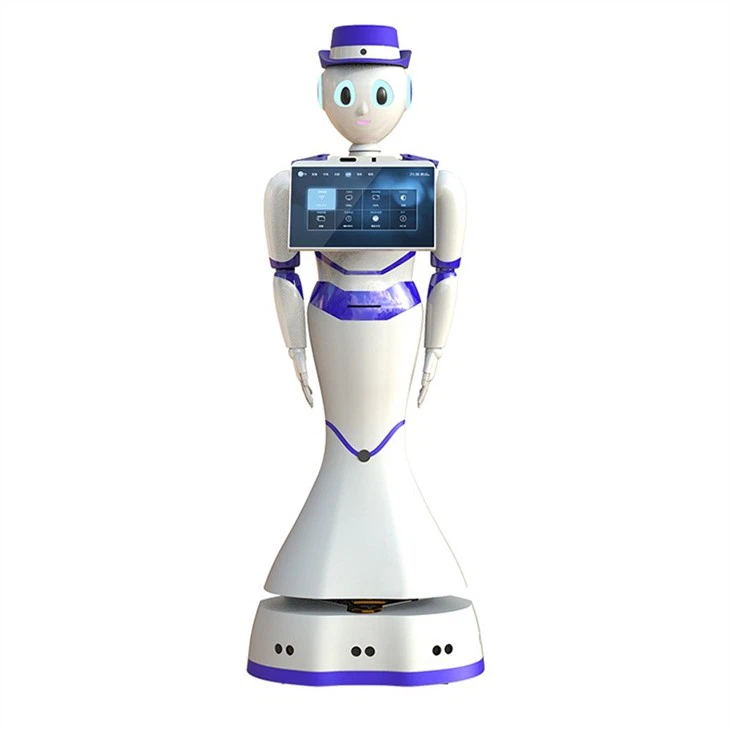
As a supplier, I offer a range of children's companion robots that are well - suited for library environments. Our Smart humanoid service robot is equipped with advanced speech recognition and natural language processing capabilities. It can understand children's questions and provide accurate and detailed answers. The robot's friendly appearance and interactive personality make it a great addition to any library.
Another option is our Exhibition hall service humanoid robot. This robot is designed to handle multiple tasks, such as guiding children through the library, introducing different sections, and providing information about library events. Its mobility and flexibility allow it to move around the library freely, interacting with children in various areas.
Our Commercial Humanoid Reception Service Robot is also an excellent choice. It can serve as a receptionist, greeting children as they enter the library and helping them find the resources they need. The robot can also keep track of children's borrowing history and provide reminders when books are due.
Challenges and Considerations
While the use of children's companion robots in libraries offers many benefits, there are also some challenges and considerations that need to be addressed.
1. Cost
The purchase and maintenance of children's companion robots can be expensive. Libraries, especially those with limited budgets, may find it difficult to afford these robots. However, in the long run, the investment in these robots can bring significant returns in terms of increased patronage and improved learning outcomes.
2. Technical Support
Robots are complex machines that require technical support. Libraries need to have a team of trained staff or access to external technical support to ensure that the robots are functioning properly. This may involve software updates, hardware repairs, and troubleshooting.
3. Privacy and Security
As robots collect and process data about children, such as their interests and reading history, privacy and security are important concerns. Libraries need to ensure that appropriate measures are in place to protect children's personal information and comply with relevant data protection regulations.
Conclusion
In conclusion, children's companion robots have great potential for use in libraries. They can enhance the learning experience, increase engagement, provide personalized service, and promote social skills development among young patrons. While there are challenges to overcome, such as cost, technical support, and privacy concerns, the benefits far outweigh the drawbacks.
As a supplier of children's companion robots, I am committed to working with libraries to explore the best ways to integrate these robots into their operations. If you are a librarian or a decision - maker in a library and are interested in learning more about our children's companion robots, I encourage you to reach out to us for a detailed discussion. We can provide you with more information about our products, pricing, and implementation plans. Let's work together to create a more innovative and engaging library environment for children.
References
- Brynjolfsson, E., & McAfee, A. (2014). The Second Machine Age: Work, Progress, and Prosperity in a Time of Brilliant Technologies. W. W. Norton & Company.
- Turkle, S. (2011). Alone Together: Why We Expect More from Technology and Less from Each Other. Basic Books.
- Resnick, M., et al. (2009). Scratch: Programming for All. Communications of the ACM, 52(11), 60 - 67.


